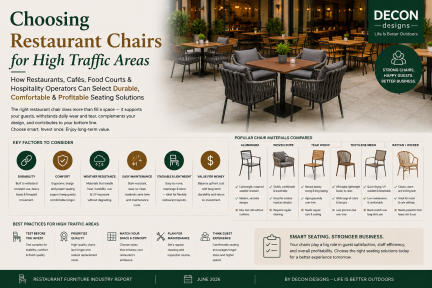
How Restaurants, Cafés, Food Courts & Hospitality Operators Can Select Durable, Comfortable & Profitable Seating Solutions
Restaurant Furniture Industry Report | June 2026 | By Decon Designs – Life Is Better Outdoors
In the restaurant business, chairs do far more than provide a place to sit.
They influence customer comfort, dining experience, operational efficiency, brand perception, maintenance costs, seating capacity, and ultimately, profitability.
For restaurants operating in high-traffic environments, chair selection becomes even more important. A chair that looks attractive on opening day may become a costly problem if it cannot withstand constant daily use.
Whether it’s a busy café in Kuala Lumpur, a resort restaurant in Langkawi, a food court in Johor Bahru, a beachfront dining venue in Penang, or a hospitality project anywhere in Southeast Asia, choosing the right restaurant chairs requires balancing durability, comfort, aesthetics, and operational practicality.
Industry experts increasingly view restaurant seating as an investment rather than a purchase.
The right chair can deliver years of performance.
The wrong chair can lead to continuous repairs, customer complaints, and unnecessary replacement expenses.
Why Restaurant Chairs Matter More Than Most Owners Realize
Restaurant chairs experience significantly more wear than residential furniture.
A single chair may be used by:
- Hundreds of customers every month
- Thousands of customers annually
Daily exposure includes:
- Continuous movement
- Frequent cleaning
- Food and beverage spills
- Dragging and stacking
- Environmental exposure
- Weight variations
As a result, commercial seating must meet far higher performance standards than residential furniture.
Understanding High-Traffic Dining Environments
High-traffic environments include:
Restaurants
- Casual dining
- Family restaurants
- Fast-casual concepts
- Buffet restaurants
Hospitality Dining
- Hotel restaurants
- Resort dining venues
- Beach clubs
- Poolside restaurants
Food & Beverage Venues
- Cafés
- Coffee shops
- Food courts
- Outdoor dining terraces
Each environment creates unique demands on furniture performance.
Start With Durability
Durability should always be the first consideration.
Restaurant chairs must withstand:
- Continuous occupancy
- Frequent movement
- Repeated cleaning
- Long operating hours
Look for:
Commercial-Grade Construction
Commercial chairs are specifically designed for heavy-duty usage.
Reinforced Frames
Strong frame construction helps prevent:
- Wobbling
- Structural failure
- Premature wear
Quality Joinery
Weak joints are among the most common causes of chair failure.
Strong joinery significantly extends chair lifespan.
Material Selection Matters
The material directly affects durability, maintenance, comfort, and appearance.
Aluminium Restaurant Chairs
One of the most popular commercial options.
Benefits:
- Lightweight
- Rust resistant
- Easy maintenance
- Suitable for indoor and outdoor use
Ideal for:
- Outdoor restaurants
- Cafés
- Hospitality venues
Teak Restaurant Chairs
Premium choice for hospitality environments.
Benefits:
- Exceptional durability
- Natural beauty
- Weather resistance
Ideal for:
- Resort restaurants
- Luxury dining spaces
- Outdoor hospitality projects
Synthetic Rattan Chairs
Popular for outdoor dining concepts.
Benefits:
- Weather resistant
- Lightweight
- Comfortable
Ideal for:
- Beach clubs
- Outdoor cafés
- Resort dining areas
Upholstered Restaurant Chairs
Provide enhanced comfort but require additional maintenance planning.
Suitable for:
- Fine dining
- Boutique hospitality
- Premium indoor dining experiences
Comfort Influences Revenue
Customer comfort directly affects:
- Dining duration
- Repeat visits
- Customer satisfaction
- Positive reviews
A chair should support comfortable seating for the average dining experience without causing discomfort.
Important factors include:
Seat Height
Should align appropriately with table height.
Back Support
Encourages relaxed dining experiences.
Cushioning
Provides comfort while maintaining durability.
Comfort is not a luxury.
It is a business strategy.
Evaluate Cleaning and Maintenance Requirements
Restaurant furniture must be cleaned regularly.
Choose materials that:
- Resist stains
- Clean easily
- Dry quickly
- Require minimal maintenance
High-maintenance furniture increases operational costs.
Outdoor Restaurant Considerations
Outdoor dining continues to grow throughout Malaysia and Southeast Asia.
Outdoor chairs must withstand:
- UV exposure
- Rain
- Humidity
- Temperature fluctuations
Recommended outdoor materials include:
- Powder-coated aluminium
- Teak
- Synthetic rattan
- Outdoor rope furniture
Avoid materials that are prone to:
- Rust
- Water absorption
- Surface deterioration
Stackability Can Improve Efficiency
Many restaurants benefit from stackable seating.
Advantages include:
- Easier storage
- Faster cleaning
- Event flexibility
- Operational convenience
Stackability is particularly useful for:
- Cafés
- Event venues
- Multi-purpose dining spaces
Safety Is Non-Negotiable
Restaurant chairs should provide:
- Stable construction
- Secure joints
- Rounded edges
- Appropriate weight capacity
Safety protects:
- Customers
- Employees
- Business reputation
Commercial furniture should always prioritize structural reliability.
Match Chairs to Brand Identity
Furniture contributes significantly to a restaurant’s atmosphere.
Modern Restaurants
Often prefer:
- Aluminium
- Minimalist designs
- Contemporary finishes
Luxury Restaurants
Frequently choose:
- Teak
- Upholstered seating
- Premium materials
Beach Clubs
Typically favor:
- Rope furniture
- Resort-style aesthetics
- Relaxed comfort
Casual Cafés
Often select:
- Lightweight commercial chairs
- Practical maintenance-friendly solutions
Furniture should reinforce the dining concept.
Consider Total Cost of Ownership
The cheapest chair is rarely the most economical.
Evaluate:
- Purchase price
- Maintenance costs
- Repair frequency
- Replacement cycles
- Operational downtime
Commercial-grade seating often provides the best long-term value.
Common Restaurant Chair Buying Mistakes
Many operators encounter problems because they:
Buy Residential Furniture
Residential furniture is not designed for commercial traffic.
Prioritize Style Over Durability
Appearance matters, but performance matters more.
Ignore Maintenance Requirements
Furniture should fit operational realities.
Choose Low-Quality Materials
Short-term savings often create long-term expenses.
Underestimate Traffic Levels
Furniture should be selected for actual usage conditions.
Restaurant Chair Procurement Checklist
Before purchasing, confirm:
✅ Commercial-grade construction
✅ Durable frame materials
✅ Comfortable seating design
✅ Easy cleaning
✅ Appropriate weight capacity
✅ Brand compatibility
✅ Weather resistance (if outdoors)
✅ Maintenance practicality
✅ Supplier reliability
✅ Long-term availability
Future Restaurant Seating Trends
Industry trends include:
- Sustainable materials
- Outdoor dining expansion
- Hospitality-inspired seating
- Multi-functional furniture
- Lightweight commercial designs
- Weather-resistant outdoor collections
Restaurants increasingly view furniture as part of the overall customer experience strategy.
Final Thoughts
Restaurant chairs are among the hardest-working assets in any food and beverage operation.
Choosing the right seating solution requires balancing comfort, durability, maintenance, safety, aesthetics, and operational efficiency.
The best restaurant chairs not only survive heavy use—they enhance customer experiences, strengthen brand identity, and contribute to long-term business success.
At Decon Designs, we help restaurants, cafés, resorts, hotels, hospitality operators, architects, and commercial property owners select seating solutions designed for high-traffic environments, tropical climates, and long-term commercial performance.
Because great dining experiences begin long before the food arrives—and often start with the chair.