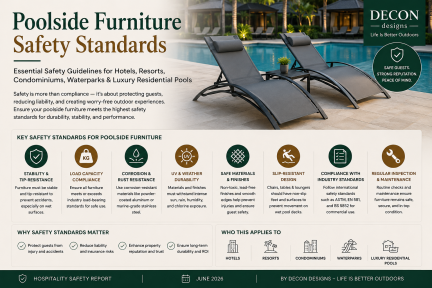
Essential Safety Guidelines for Hotels, Resorts, Condominiums, Waterparks & Luxury Residential Pools
Hospitality Safety Report | June 2026 | By Decon Designs – Life Is Better Outdoors
Poolside environments are among the most attractive and revenue-generating spaces in hotels, resorts, residential developments, wellness retreats, beach clubs, and hospitality properties. Guests are naturally drawn to pools for relaxation, social interaction, recreation, and leisure experiences.
However, behind every beautiful poolside setting lies a critical responsibility: safety.
While most property owners focus on aesthetics, comfort, and durability when selecting poolside furniture, safety standards are often overlooked until an accident occurs.
The reality is simple:
Poorly selected poolside furniture can create serious safety risks, increase liability exposure, damage guest confidence, and negatively impact property reputation.
Today, leading hospitality operators view poolside furniture not only as a design investment but as an essential component of risk management and guest safety.
Why Poolside Furniture Safety Matters
Pool environments present unique challenges that traditional furniture is not designed to handle.
Furniture is exposed to:
- Constant moisture
- Wet surfaces
- Chlorinated water
- UV radiation
- High humidity
- Frequent guest movement
- Barefoot traffic
- Heavy commercial use
These conditions significantly increase the importance of selecting furniture that meets commercial-grade safety requirements.
The Cost of Unsafe Poolside Furniture
Poor furniture selection can result in:
Guest Injuries
Potential incidents include:
- Slips
- Falls
- Pinched fingers
- Structural failures
- Sharp edge injuries
Legal Liability
Hotels and resorts may face:
- Compensation claims
- Insurance complications
- Regulatory investigations
- Reputation damage
Negative Reviews
Guests increasingly share safety concerns online.
Even minor incidents can affect:
- Online ratings
- Brand trust
- Booking decisions
Preventive planning is always less expensive than reactive problem-solving.
Safety Standard #1: Stability and Structural Integrity
Furniture should remain stable on pool decks, even under frequent use.
Key considerations include:
- Strong frame construction
- Balanced weight distribution
- Commercial-grade engineering
- Resistance to tipping
Pool loungers, chairs, daybeds, and tables should remain secure even when guests shift positions frequently.
Recommended Materials
- Powder-coated aluminium
- Commercial-grade teak
- Marine-grade metals
- High-quality synthetic materials
These materials typically provide superior structural reliability.
Safety Standard #2: Slip-Resistant Furniture Design
Wet environments create obvious slip hazards.
Furniture should be designed to minimize:
- Sliding movement
- Instability on wet surfaces
- Uncontrolled shifting
Important Features
- Non-slip feet
- Rubberized glides
- Stable bases
- Secure positioning systems
This is particularly important around:
- Resort pools
- Infinity pools
- Rooftop pools
- Waterparks
- Residential condominiums
Safety Standard #3: Rounded Edges and Safe Corners
Poolside spaces often involve:
- Children
- Barefoot guests
- High pedestrian traffic
Furniture with sharp edges increases injury risks.
Preferred Design Features
- Rounded corners
- Smooth surfaces
- Soft-touch edges
- Safe finishing details
Modern hospitality furniture increasingly incorporates safety-focused design principles without sacrificing aesthetics.
Safety Standard #4: Weather and Corrosion Resistance
Furniture failure is often caused by environmental deterioration.
Poolside furniture is continuously exposed to:
- Water
- Chlorine
- Humidity
- UV radiation
Corrosion can weaken structural integrity over time.
Recommended Materials
Powder-Coated Aluminium
Excellent resistance to:
- Rust
- Corrosion
- Moisture
Teak
Naturally resistant to:
- Water
- Rot
- Decay
Synthetic Rattan
Provides excellent weather resistance when commercial-grade materials are used.
Choosing the correct materials significantly improves long-term safety.
Safety Standard #5: Weight Capacity Compliance
Commercial pool furniture should be selected according to expected guest usage.
Considerations include:
- Maximum weight capacity
- Structural testing
- Commercial certification
- Heavy-duty performance
Hospitality furniture should never be selected based solely on appearance.
Load-bearing performance is equally important.
Safety Standard #6: UV Resistance
Pool furniture remains exposed to sunlight for extended periods.
UV damage can cause:
- Material weakening
- Surface cracking
- Structural degradation
- Cushion deterioration
UV-resistant materials help maintain both safety and appearance.
Safety Standard #7: Fire Safety Considerations
Certain hospitality projects require attention to fire safety standards.
Particularly relevant for:
- Resorts
- Hotels
- Beach clubs
- Rooftop venues
Commercial-grade upholstery and fabrics may offer:
- Fire-resistant properties
- Compliance with hospitality regulations
- Enhanced guest safety
Operators should verify local regulatory requirements.
Safety Standard #8: Safe Cushion and Upholstery Systems
Outdoor cushions should:
- Dry quickly
- Resist mold growth
- Maintain shape
- Avoid water retention
Poor-quality cushions can create:
- Hygiene issues
- Slipping hazards
- Guest discomfort
Quick-dry foam and commercial-grade outdoor fabrics are recommended.
Safety Standard #9: Child-Friendly Pool Furniture
Family-oriented properties should consider child safety.
Recommended features include:
- Rounded furniture edges
- Stable furniture design
- Secure positioning
- Reduced pinch points
Family resorts increasingly evaluate furniture from both adult and child safety perspectives.
Safety Standard #10: Regular Safety Inspections
Even premium furniture requires routine inspection.
Daily Checks
- Loose components
- Surface damage
- Cushion condition
Monthly Inspections
- Structural integrity
- Fastener security
- Corrosion monitoring
Annual Audits
- Furniture lifecycle assessment
- Replacement planning
- Risk management review
Preventive inspections significantly reduce accident risks.
Poolside Furniture Materials Ranked for Safety
Excellent
- Powder-coated aluminium
- Commercial-grade teak
- Marine-grade aluminium
Very Good
- Premium synthetic rattan
- Commercial rope furniture
Use with Caution
- Untreated steel
- Low-grade plastics
- Residential furniture used commercially
Material selection directly impacts long-term safety performance.
Hospitality Safety Is Becoming a Competitive Advantage
Modern travelers increasingly evaluate:
- Comfort
- Cleanliness
- Safety
- Maintenance standards
Safe and well-maintained furniture contributes to:
- Positive guest experiences
- Strong online reviews
- Improved brand reputation
- Reduced liability exposure
The most successful hospitality operators view safety as part of the guest experience itself.
Future Trends in Poolside Furniture Safety
The industry is moving toward:
- Commercial-grade materials
- UV-resistant systems
- Sustainable furniture solutions
- Modular safety-focused designs
- Enhanced maintenance tracking
- Hospitality risk management programs
Furniture safety is becoming a key component of property management strategies.
Final Thoughts
Poolside furniture plays a vital role in guest comfort, operational efficiency, brand perception, and safety.
Selecting furniture that meets appropriate safety standards helps protect guests, reduce liability, improve durability, and enhance long-term return on investment.
Hotels, resorts, beach clubs, condominiums, wellness retreats, and hospitality operators should view poolside furniture not merely as décor, but as critical infrastructure supporting guest experiences.
At Decon Designs, we help hospitality operators, developers, architects, and property owners select poolside furniture solutions that combine safety, durability, comfort, aesthetics, and commercial performance for tropical environments.
Because the best poolside experience is one where guests can relax with confidence, comfort, and peace of mind.