Why Smart Furniture Planning Is Becoming a Critical Success Factor for Property Developers, Architects, Consultants & Project Owners
Property Developer Education Series | June 2026 | By Decon Designs – Life Is Better Outdoors
In today’s highly competitive property market, successful developments are no longer judged solely by location, architecture, amenities, or pricing. Increasingly, buyers, investors, tenants, hotel guests, and commercial occupants evaluate developments based on the complete user experience.
Furniture plays a far greater role in that experience than many developers initially realize.
From sales galleries and show units to lobbies, clubhouses, pool decks, rooftop lounges, co-working spaces, outdoor gardens, hospitality areas, serviced apartments, and mixed-use developments, furniture has become a strategic component of property development planning.
The most successful projects today integrate furniture planning from the earliest design stages rather than treating it as a final procurement exercise.
For developers, furniture is no longer merely an operational requirement.
It is a value creation tool.
Why Furniture Planning Matters in New Developments
Furniture influences:
- Buyer perception
- Property value
- Marketability
- User experience
- Occupancy rates
- Rental performance
- Hospitality revenue
- Long-term maintenance costs
Well-planned furniture contributes to stronger project positioning and improved return on investment.
Poor furniture planning can negatively affect even the most architecturally impressive developments.
The Shift Toward Experience-Led Developments
Modern consumers expect more than physical spaces.
They expect experiences.
Today’s developments increasingly compete based on:
- Lifestyle offerings
- Community spaces
- Wellness facilities
- Outdoor living environments
- Hospitality-inspired amenities
Furniture is the physical element that transforms empty spaces into usable experiences.
Without proper furniture planning, many amenities fail to deliver their intended value.
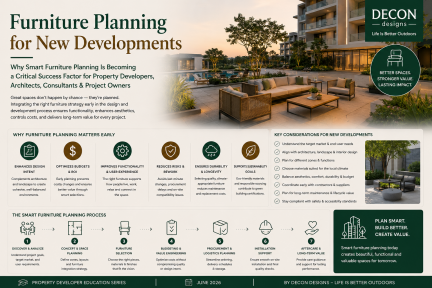
Furniture Planning Should Begin During Design Development
One of the most common mistakes developers make is postponing furniture decisions until construction is nearly complete.
This approach often leads to:
- Budget overruns
- Space planning challenges
- Design inconsistencies
- Procurement delays
- Reduced functionality
Furniture planning should ideally begin during:
Concept Design
To align furniture with project vision.
Design Development
To ensure furniture dimensions complement architectural layouts.
Budget Planning
To accurately forecast costs.
Procurement Strategy
To avoid supply chain disruptions.
Early planning creates greater flexibility and better outcomes.
Identify the Development Type
Furniture requirements vary significantly based on project category.
Residential Developments
Examples:
- Condominiums
- Apartments
- Gated communities
Key furniture areas include:
- Lobbies
- Clubhouses
- Pool decks
- Outdoor gardens
- Function rooms
Hospitality Developments
Examples:
- Hotels
- Resorts
- Serviced apartments
Furniture directly impacts guest satisfaction and operational performance.
Commercial Developments
Examples:
- Office buildings
- Mixed-use developments
- Retail destinations
Furniture supports productivity, visitor experience, and brand identity.
Lifestyle Developments
Examples:
- Wellness communities
- Retirement villages
- Tourism destinations
Furniture becomes part of the lifestyle proposition itself.
Plan Every Shared Space Strategically
Many developments underutilize common areas because furniture planning is overlooked.
Key areas requiring dedicated furniture strategies include:
Main Lobby
Creates the first impression.
Furniture should communicate:
- Quality
- Comfort
- Brand positioning
Clubhouse
Supports community interaction and resident engagement.
Rooftop Lounges
Increasingly important in urban developments.
Swimming Pool Areas
Require durable and weather-resistant furniture.
Co-Working Spaces
Growing in popularity across residential and mixed-use projects.
Outdoor Gardens
Furniture transforms landscaping investments into usable environments.
Outdoor Furniture Planning Is Often Undervalued
Outdoor amenities have become significant selling points.
Potential outdoor spaces include:
- Pool decks
- Garden lounges
- Rooftop terraces
- Sky decks
- BBQ areas
- Courtyard spaces
- Wellness zones
Outdoor furniture must be selected according to:
- Climate conditions
- Maintenance requirements
- Durability expectations
- User behavior
For tropical environments such as Malaysia, weather resistance is essential.
Choosing the Right Materials
Material selection directly affects:
- Lifespan
- Maintenance costs
- User experience
- Replacement frequency
Teak
Ideal for:
- Luxury developments
- Hospitality environments
- Outdoor lounges
Advantages:
- Long lifespan
- Premium appearance
- Weather resistance
Powder-Coated Aluminium
Ideal for:
- Modern developments
- Rooftop spaces
- Poolside areas
Advantages:
- Rust resistance
- Low maintenance
- Lightweight construction
Synthetic Rattan
Popular for:
- Outdoor hospitality spaces
- Clubhouses
- Resort-inspired amenities
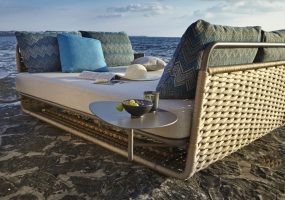
Outdoor Rope Furniture
Increasingly used in premium developments seeking contemporary aesthetics.
Furniture and Property Value
Furniture influences perceived value.
Well-furnished amenities can:
- Increase buyer confidence
- Support premium pricing
- Improve rental yields
- Enhance project branding
Many successful developers now view furniture as part of their marketing strategy.
Furniture Planning for Show Units
Show units play a critical role in sales conversion.
Furniture should:
- Demonstrate lifestyle possibilities
- Highlight space utilization
- Create emotional connections
- Appeal to target demographics
A well-furnished show unit often becomes one of the most effective sales tools available.
Understanding User Demographics
Furniture planning should reflect expected occupants.
Young Professionals
Typically prefer:
- Contemporary designs
- Flexible spaces
- Co-working environments
Families
Prioritize:
- Durability
- Comfort
- Community spaces
Luxury Buyers
Expect:
- Premium materials
- Hospitality-inspired amenities
- Exclusive outdoor experiences
Understanding the target market improves furniture selection accuracy.
Maintenance Planning Should Be Part of Procurement
Developers often focus heavily on acquisition costs while overlooking lifecycle costs.
Furniture planning should evaluate:
- Cleaning requirements
- Repair frequency
- Replacement schedules
- Spare parts availability
The most successful projects consider total cost of ownership.
Sustainability Is Becoming a Development Priority
Investors, residents, and regulators increasingly value sustainable development practices.
Furniture strategies should consider:
- Sustainable materials
- Product longevity
- Responsible sourcing
- Reduced environmental impact
Long-lasting furniture often provides both environmental and financial benefits.
Common Furniture Planning Mistakes
Developers frequently encounter challenges because they:
❌ Plan furniture too late
❌ Focus solely on aesthetics
❌ Ignore maintenance requirements
❌ Underestimate outdoor furniture needs
❌ Choose residential-grade products for shared spaces
❌ Overlook future replacement planning
These mistakes often increase operational costs and reduce user satisfaction.
Developer Furniture Planning Checklist
Before procurement begins, confirm:
✅ Furniture strategy integrated into project planning
✅ Amenity spaces evaluated
✅ User demographics identified
✅ Outdoor furniture requirements assessed
✅ Commercial-grade products specified
✅ Weather resistance considered
✅ Maintenance plans established
✅ Budget forecasts completed
✅ Supplier reliability verified
✅ Long-term replacement strategy developed
Future Trends in Development Furniture Planning
Property developments are increasingly embracing:
- Hospitality-inspired amenities
- Outdoor living concepts
- Wellness-focused spaces
- Community-centric design
- Flexible multi-use environments
- Sustainable furniture solutions
Furniture is becoming a strategic differentiator in project success.
Final Thoughts
Furniture planning is no longer a finishing touch—it is an essential component of successful property development.
Whether developing residential communities, luxury condominiums, hotels, resorts, serviced apartments, mixed-use projects, or commercial destinations, furniture directly influences user experience, project value, operational efficiency, and long-term profitability.
Developers who integrate furniture planning early in the project lifecycle consistently achieve stronger outcomes, better user engagement, and improved return on investment.
At Decon Designs, we work with developers, architects, consultants, contractors, hospitality operators, and property owners to create furniture strategies that enhance project value, support long-term performance, and create spaces people genuinely enjoy using.
Because great developments are not remembered for empty spaces—they are remembered for the experiences they create.