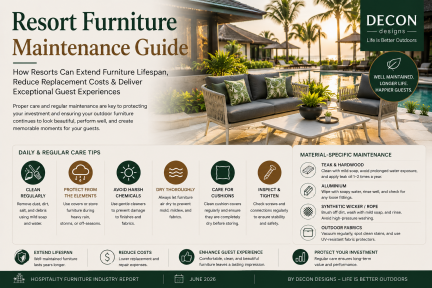
How Resorts Can Extend Furniture Lifespan, Reduce Replacement Costs & Deliver Exceptional Guest Experiences
Hospitality Furniture Industry Report | June 2026 | By Decon Designs – Life Is Better Outdoors
In the hospitality industry, first impressions matter. Guests notice beautiful poolside loungers, elegant outdoor dining furniture, luxurious daybeds, comfortable resort sofas, and well-maintained outdoor spaces long before they notice many other operational details.
However, maintaining resort furniture is becoming increasingly challenging, particularly in tropical destinations such as Malaysia, Thailand, Indonesia, Vietnam, the Maldives, Sri Lanka, and other hospitality markets where furniture is constantly exposed to harsh environmental conditions.
Many resort operators invest heavily in premium furniture during development but underestimate the importance of long-term maintenance planning.
The result?
Premature furniture deterioration, increased replacement costs, negative guest perceptions, and reduced return on investment.
A structured furniture maintenance strategy can significantly extend furniture lifespan, protect brand image, and improve operational efficiency.
Why Resort Furniture Requires Specialized Maintenance
Unlike residential furniture, resort furniture operates under far more demanding conditions.
Resort furniture faces:
- Continuous guest usage
- Intense UV exposure
- Tropical humidity
- Heavy rainfall
- Pool chemicals
- Salt air exposure
- Food and beverage spills
- Frequent cleaning
In many resorts, furniture is used daily, often 365 days a year.
Without proper maintenance, even premium furniture can deteriorate much faster than expected.
The Hidden Cost of Poor Furniture Maintenance
Many hospitality operators only calculate furniture purchase costs.
However, the true financial impact includes:
Replacement Costs
Premature furniture replacement can significantly affect operational budgets.
Guest Satisfaction Impact
Worn, faded, broken, or damaged furniture negatively affects guest perception.
Online Reviews
Guests frequently comment on maintenance standards.
Furniture condition directly influences:
- Guest experience
- Property ratings
- Brand reputation
Operational Disruption
Replacing furniture unexpectedly often creates logistical challenges and additional costs.
A preventive maintenance program is far more cost-effective than reactive replacement.
Create a Resort Furniture Maintenance Schedule
The most successful resorts follow structured maintenance schedules.
Daily Tasks
Housekeeping and maintenance teams should:
- Remove dirt and debris
- Wipe furniture surfaces
- Inspect for damage
- Remove standing water
- Check cushions and upholstery
Daily attention prevents minor issues from becoming major problems.
Weekly Tasks
Maintenance teams should:
- Deep clean furniture surfaces
- Inspect hardware and fasteners
- Check fabric conditions
- Remove mold or mildew buildup
- Inspect poolside furniture
Regular inspections help identify issues early.
Monthly Tasks
Conduct detailed assessments of:
- Structural stability
- Surface finishes
- Upholstery condition
- Wood treatments
- Metal coatings
Documenting inspections helps track furniture performance over time.
Quarterly Reviews
Resort management should evaluate:
- Furniture condition
- Maintenance costs
- Repair requirements
- Replacement forecasts
Strategic reviews support long-term budgeting and asset planning.
Teak Furniture Maintenance
Teak remains one of the most popular materials for luxury resorts.
Benefits
- Exceptional durability
- Weather resistance
- Natural beauty
Maintenance Requirements
To maintain teak furniture:
- Clean regularly using mild soap
- Remove dirt accumulation
- Avoid harsh chemicals
- Apply teak protector if maintaining original color
Many resorts allow teak to naturally weather into its attractive silver-grey appearance.
This is largely a design preference rather than a maintenance issue.
Balau Furniture Maintenance
Balau is widely used throughout tropical hospitality projects.
Recommended Practices
- Regular cleaning
- Periodic oil treatment
- Inspection for surface cracking
- Moisture management
Proper maintenance helps preserve appearance and extend service life.
Aluminium Furniture Maintenance
Powder-coated aluminium is increasingly popular in modern hospitality environments.
Advantages
- Rust resistant
- Low maintenance
- Durable
Maintenance Tips
- Wash regularly with mild detergent
- Remove salt residue in coastal environments
- Inspect coating integrity
- Address scratches promptly
Aluminium remains one of the easiest materials to maintain.
Synthetic Rattan Furniture Maintenance
Synthetic rattan performs exceptionally well in tropical climates.
Maintenance Recommendations
- Remove dirt regularly
- Wash woven surfaces periodically
- Inspect weave integrity
- Check frame stability
Commercial-grade synthetic rattan can provide many years of reliable service with minimal maintenance.
Outdoor Cushion Maintenance
Outdoor cushions often fail before furniture frames.
Common Causes of Failure
- UV exposure
- Moisture retention
- Mold growth
- Poor storage
Best Practices
- Use UV-resistant fabrics
- Invest in quick-dry foam
- Rotate cushions regularly
- Store during severe weather
- Clean routinely
Well-maintained cushions significantly enhance guest comfort and property appearance.
Poolside Furniture Maintenance
Pool areas present unique challenges.
Furniture is exposed to:
- Chlorinated water
- High humidity
- Intense sunlight
Recommended Actions
- Rinse furniture regularly
- Remove chemical residue
- Inspect fabrics frequently
- Monitor hardware condition
Preventive maintenance is especially important in pool environments.
Beachfront Resort Furniture Maintenance
Coastal resorts face additional challenges from salt air.
Salt exposure can accelerate:
- Corrosion
- Surface deterioration
- Hardware damage
Coastal Maintenance Strategy
- Frequent rinsing
- Salt residue removal
- Corrosion inspections
- Hardware replacement when necessary
Properties near the ocean should implement more frequent maintenance schedules.
Staff Training Matters
One of the most overlooked elements of furniture maintenance is staff education.
Housekeeping and maintenance teams should understand:
- Material differences
- Cleaning procedures
- Inspection requirements
- Reporting protocols
Training improves consistency and reduces avoidable damage.
Build a Furniture Asset Management System
Leading hospitality operators increasingly track furniture as strategic assets.
Recommended tracking includes:
- Installation dates
- Maintenance history
- Repair records
- Replacement schedules
- Warranty information
This approach improves forecasting and budget planning.
Sustainability Through Maintenance
Maintaining furniture properly is not only financially responsible—it is environmentally responsible.
Extended furniture lifespan results in:
- Reduced waste
- Lower replacement frequency
- Improved resource efficiency
- Better sustainability performance
This aligns with the growing demand for environmentally conscious hospitality operations.
Signs It’s Time for Furniture Replacement
Even with excellent maintenance, furniture eventually reaches the end of its useful life.
Watch for:
- Structural instability
- Excessive corrosion
- Severe cracking
- Irreparable fabric damage
- Safety concerns
- Significant aesthetic deterioration
Replacement decisions should balance safety, guest experience, and operational costs.
The Future of Resort Furniture Maintenance
Hospitality operators are increasingly adopting:
- Preventive maintenance programs
- Asset management systems
- Commercial-grade materials
- Sustainability-focused procurement
- Long-life furniture strategies
The goal is no longer simply maintaining furniture.
The goal is maximizing guest experience while optimizing long-term return on investment.
Final Thoughts
Resort furniture is a significant investment that directly influences guest satisfaction, operational performance, and brand perception.
Without a structured maintenance program, even premium furniture can deteriorate prematurely. With proper care, many hospitality furniture systems can remain attractive, functional, and profitable for years or even decades.
At Decon Designs, we help resorts, hotels, beach clubs, hospitality operators, developers, and commercial property owners select and maintain furniture solutions specifically designed for tropical environments.
Because in hospitality, great furniture is not just about design—it is about delivering exceptional guest experiences every single day.